

For many families relocating to Brisbane, school choice comes first. The type of home or suburb usually follows.
If you’re aiming for a top public school, the school catchment zone often becomes a deal-breaker. For investors, properties in high-demand catchments attract premium prices and outperform surrounding areas. In fact, Domain’s 2023 National School Zones Report revealed that nine of the top ten secondary schools and seven of the top ten primary schools with the strongest annual growth were in Brisbane.
This article explains how Brisbane’s school catchments work, why they matter, and what to consider when buying in a catchment zone.
What is a school catchment?
In Queensland, each public school has a defined catchment area – the geographic zone where enrolled students must live. Families within the zone have guaranteed access to that school. Catchments exist to:
-
Ensure fair access to education close to home.
-
Manage school capacity and prevent overcrowding.
Why catchments matter in property decisions
Catchments don’t follow suburb boundaries. They often cut across neighbourhoods, which means house prices can vary dramatically from one street to the next. Properties inside sought-after catchments typically see stronger demand and faster growth than those outside.
How to find homes in a catchment
-
Domain offers a tool to search for properties by school catchment.
-
Queensland Government’s EdMap lets you check the official boundaries for Brisbane primary and secondary schools.
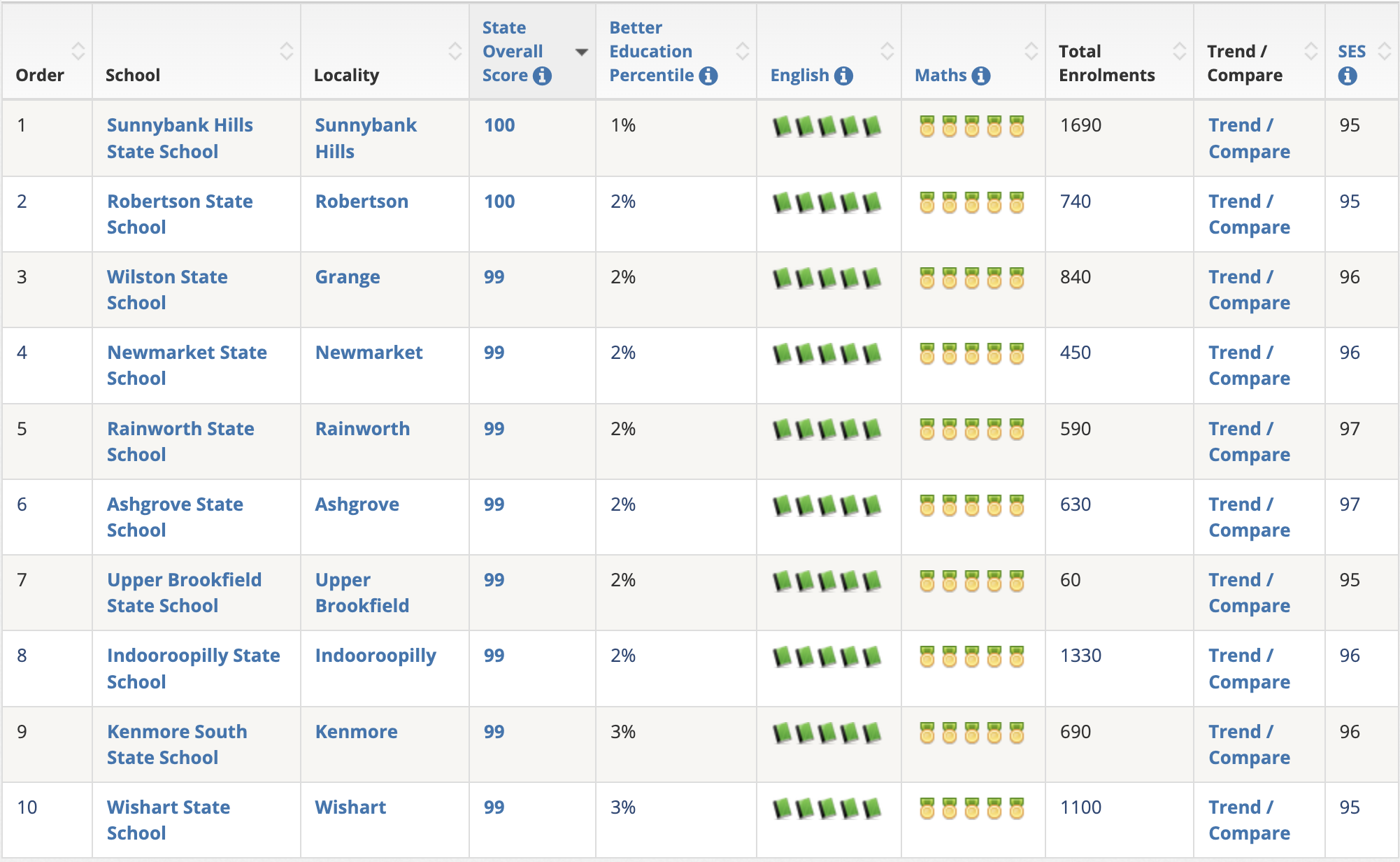
Brisbane’s top public primary schools
According to Better Education, the following schools ranked as Brisbane’s top ten public primary schools in 2025:
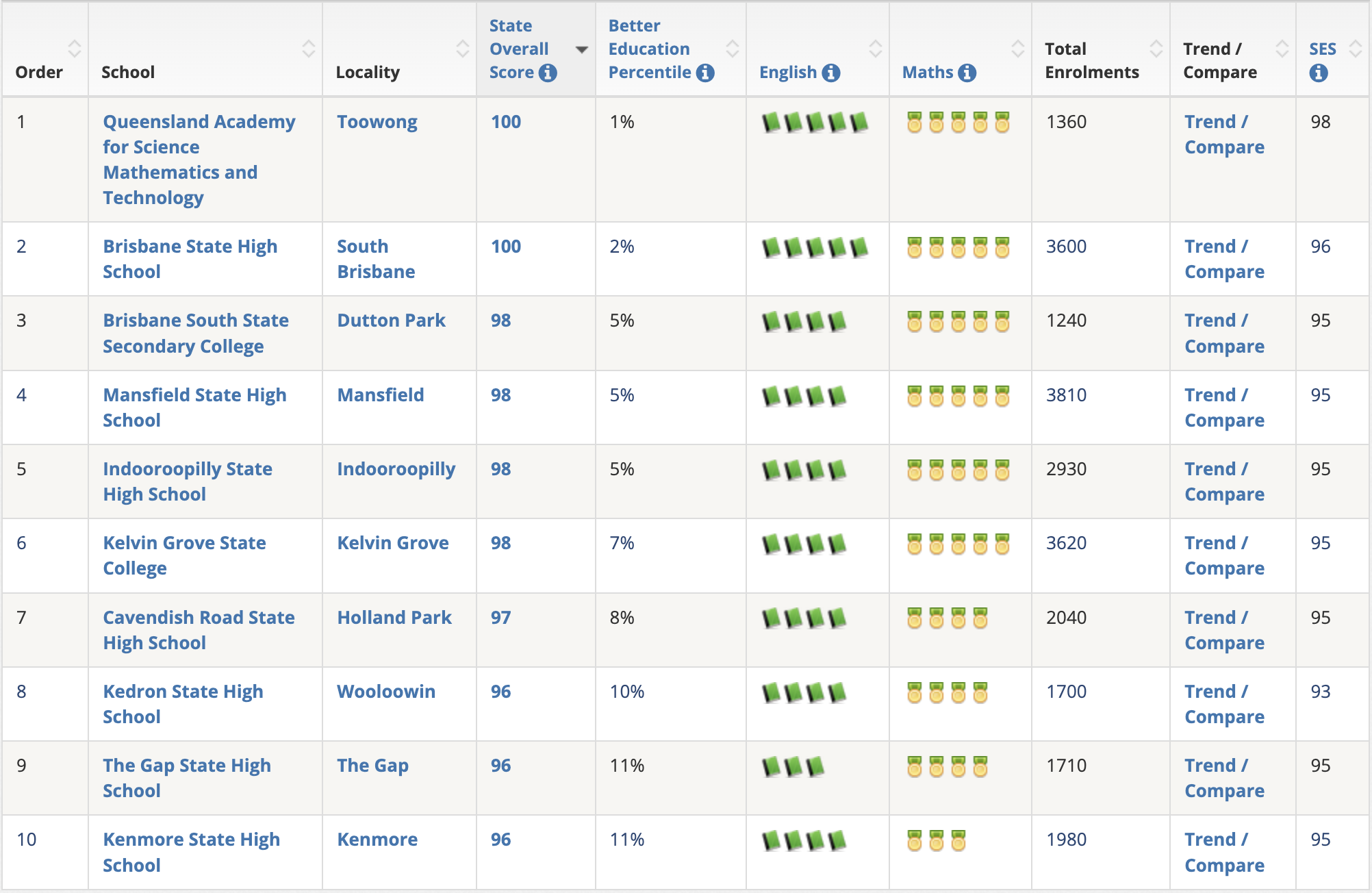
High-achieving Brisbane public high schools
The following Brisbane public high schools were ranked among the top 10 in 2025 (source: Better Education):
Does location matter for private schools?
While private schools don’t use a catchment system, location is still a decisive factor for families enrolling their children in a private school.
Living close to school means living close to extracurricular activities and peers, supporting children’s social and emotional well-being and making it easier for them to participate in their community. Just like public school catchment zones, proximity to private schools can drive up property prices.
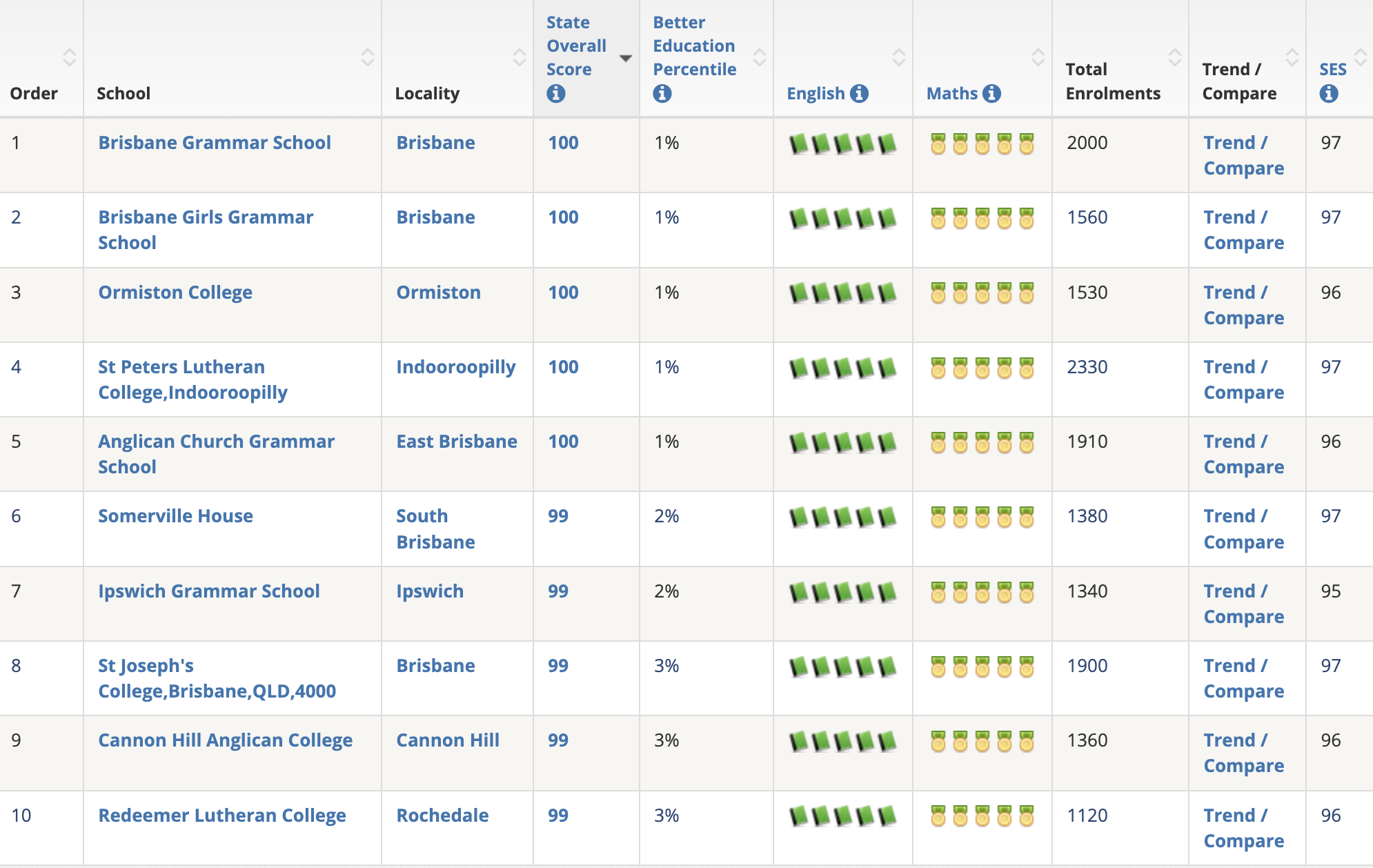
Top Brisbane private schools for 2025 are listed below (source: Better Education):
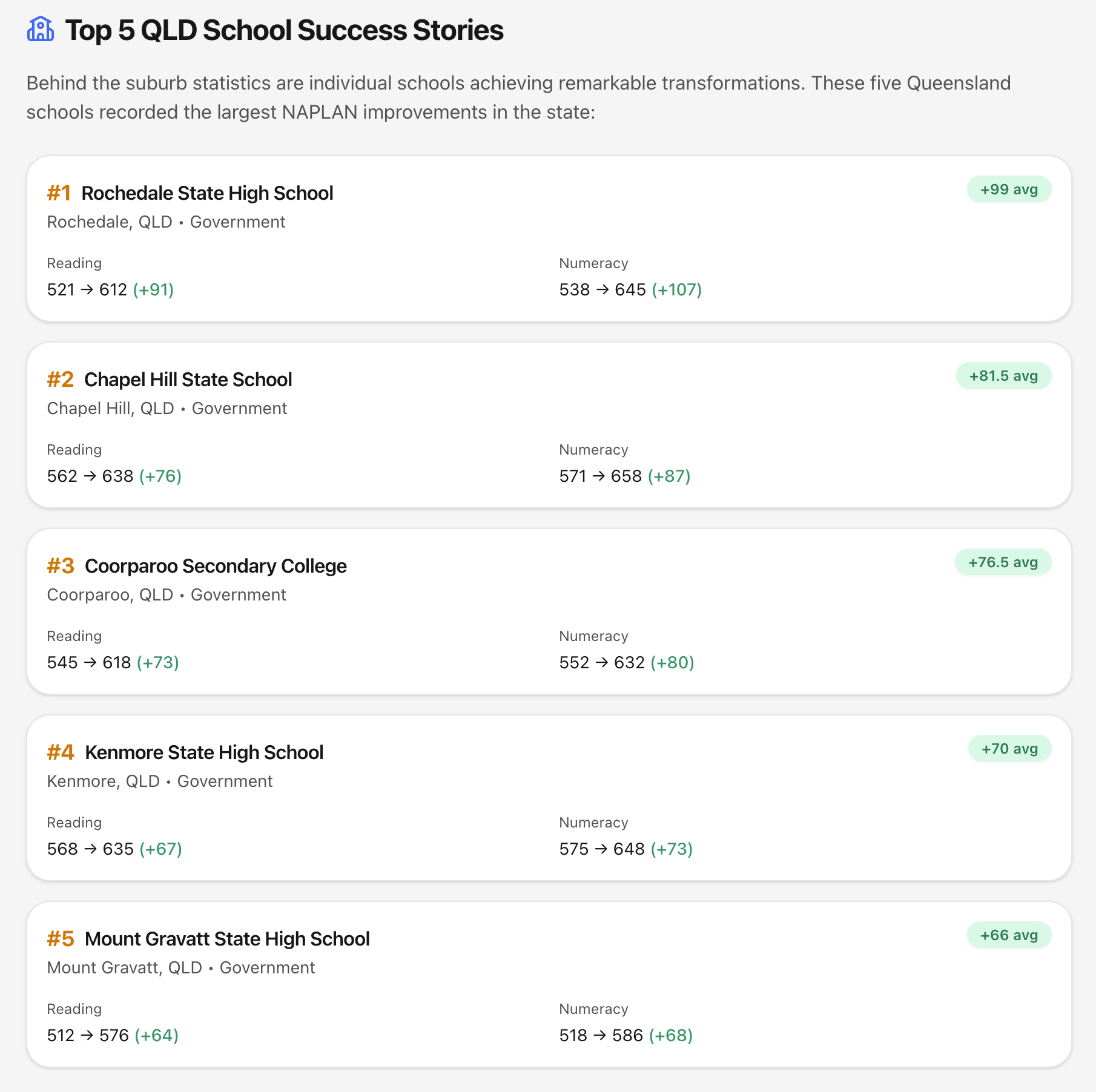
According to SchoolRankAU, Brisbane’s latest school performance results highlight just how much catchment address can shape educational outcomes. Brisbane’s latest school performance results highlight just how much catchment address can shape educational outcomes. Rochedale leads the city with a +46.3 point average improvement across its three schools, while Chapel Hill and Kenmore headline a strong showing from the western suburbs. Mount Gravatt also features in the top five, rounding out an impressive spread of performing catchments across Brisbane. Notably, government schools are driving these gains, with all five of the top individual school improvers being state schools, which is a timely reminder that some of Brisbane’s strongest performers don’t come with a private school price tag – just the right postcode.
Understanding and checking school catchments can be crucial for planning your child’s state school education and ensuring you live within the desired school zone. If you need any assistance with school catchments or finding a home in a specific school catchment, feel free to reach out!
Sandra
sandra@homescouts.com.au
0419 992 873